
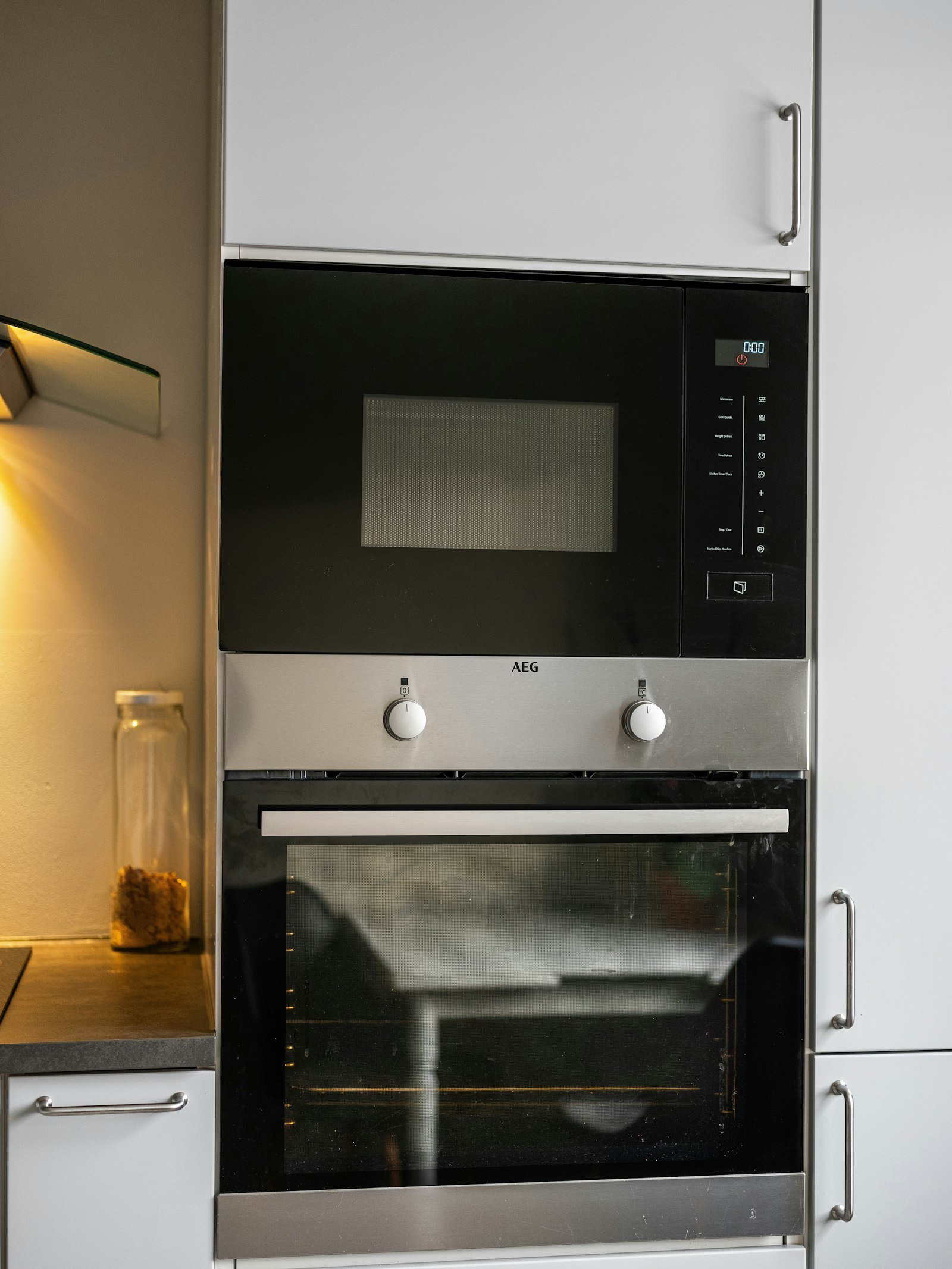
An oven not heating is one of the most frustrating kitchen problems in Dubai homes. You set the temperature, wait, and the food stays raw, or the oven stays cold while the light and display work as normal. The cause is often a small part such as a heating element, a thermostat or a gas ignition fault. This guide explains how to tell a gas oven from an electric oven problem, what is safe to check yourself, and when to call a technician.
Oven not heating: know your oven type
Gas and electric ovens fail in different ways, so start by confirming which type you have. Built-in ovens, freestanding cookers and the oven section of a cooking range all work on one of these two systems.
- Electric oven: heating elements at the top and bottom glow red when the oven works. If neither glows, the problem is in the element, the thermostat, the control board or the power supply.
- Gas oven: a burner under the oven floor lights with a spark or a hot igniter. If you hear clicking but see no flame, or the flame lights and goes out, the igniter, the safety valve or the thermocouple may be at fault.
- Fan (convection) oven: a fan moves the hot air around. A failed fan will not stop the oven heating, but food cooks unevenly.
Signs your oven has a heating problem
- The display and light work, but the inside stays cold or only warm
- The oven heats very slowly or never reaches the temperature you set
- Food is raw in the middle, or cooks on one side only
- The top element heats but the bottom does not, or the other way round
- The oven heats at first, then the temperature drops by itself
- Clicking sounds with no flame on a gas oven
Safe checks before you call a technician
Always switch the oven off and let it cool before checking anything. Never open the back panel or touch the wiring yourself.
- Check the controls. Make sure the oven is set to bake or conventional heat, not grill only, defrost, timer mode or a locked setting.
- Check the clock and timer. Some ovens will not heat if a timed or delayed start is still active.
- Check the power. For an electric oven, look at the circuit breaker in your distribution board. If it has tripped, switch it back on once. If it trips again, stop and call a technician.
- Check the gas supply. For a gas oven, make sure the gas valve is open and that other gas burners light normally.
- Look inside. Remove loose racks and trays that block air flow and check that nothing is covering the vents.
- Test with an oven thermometer. If the display says 200 degrees but the thermometer reads much lower, the temperature sensor or thermostat may need replacing.
If you smell gas at any time, turn off the gas supply, open the windows, do not use switches or flames, and call your gas provider or the emergency services first.
Common causes of an oven not heating
- Burnt-out heating element: the most common fault in electric ovens. A damaged element may show blisters, cracks or a break in the metal.
- Faulty thermostat or temperature sensor: the oven reads the wrong temperature and switches the heat off too early or never switches it on.
- Failed igniter in a gas oven: the igniter glows weakly or not at all, so the gas valve does not open fully.
- Thermocouple or safety valve problem: the flame lights, then goes out because the safety system does not detect heat.
- Control board or selector switch fault: the oven receives your setting but does not send power to the heating parts.
- Damaged wiring or a loose connection: heat and age can wear the wires behind the oven.
- Door seal problem: a worn seal lets heat escape, so the oven struggles to reach the set temperature.
How to tell an element problem from a thermostat problem
- If an electric oven stays completely cold and the elements never glow, the element, the power supply or the control board is more likely.
- If the elements glow but the oven is much hotter or colder than the dial says, the thermostat or sensor is more likely.
- If only one element works, the other element has probably failed.
These are only signs. A technician needs to test the part with the right tools before deciding what to replace.
How to keep your oven working well
- Wipe spills after the oven cools, because baked-on grease can damage elements and igniters
- Do not line the oven floor with foil, because it can block heat and gas flow
- Close the door gently and check the seal for cracks every few months
- Use the oven only with the racks and trays made for it
- Clean the gas burner ports and igniter area during a professional service
- Do not use the self-clean or high-heat modes more than needed
When to call a technician
Call a technician if the oven stays cold after the basic checks, if the breaker keeps tripping, if you see burn marks or damaged wiring, or if a gas oven clicks without lighting. Gas and electrical repairs are not a do-it-yourself job, and wrong repairs can cause fires or gas leaks.
Repair or replace? As a general guide, repairing is usually sensible when the oven is in good condition and the repair costs less than half the price of a new one. A new element, thermostat or igniter is a small part compared with a new oven, so most heating faults are worth repairing.
Need help now? Mr. Appliance offers oven repair in Dubai for gas, electric and built-in ovens. The price is agreed before work starts, inspection and repair are from AED 150, and repairs come with a one-month warranty on parts and labour. Message us on WhatsApp or call +971 55 367 8417.
Oven not heating: frequently asked questions
Why is my oven light on but the oven is not heating?
The light and display use a separate circuit from the heating parts. A burnt-out element, a faulty thermostat, a failed igniter or a control board fault can leave the oven cold while the light still works.
Why does my gas oven click but not light?
The igniter or the gas valve is usually the cause. A dirty burner or a weak spark can also stop the flame from catching. Turn the oven off and call a technician rather than trying again and again.
Can I replace an oven heating element myself?
We do not recommend it. The element is connected to mains power inside the oven, and a wrong connection can cause a short circuit or a fire. A technician can test the element first, since the fault is not always the element.
Why does my oven take so long to heat up?
A worn heating element, a faulty temperature sensor or a damaged door seal can all slow down heating. A thermometer inside the oven shows whether it reaches the set temperature.
Is it safe to use an oven that heats unevenly?
It is usually safe for a short time, but uneven heating means something is wearing out. Food can stay undercooked, which is a health risk with meat and chicken. Have the oven checked soon.
Read more about oven repair in Dubai or our cooking range repair service.